
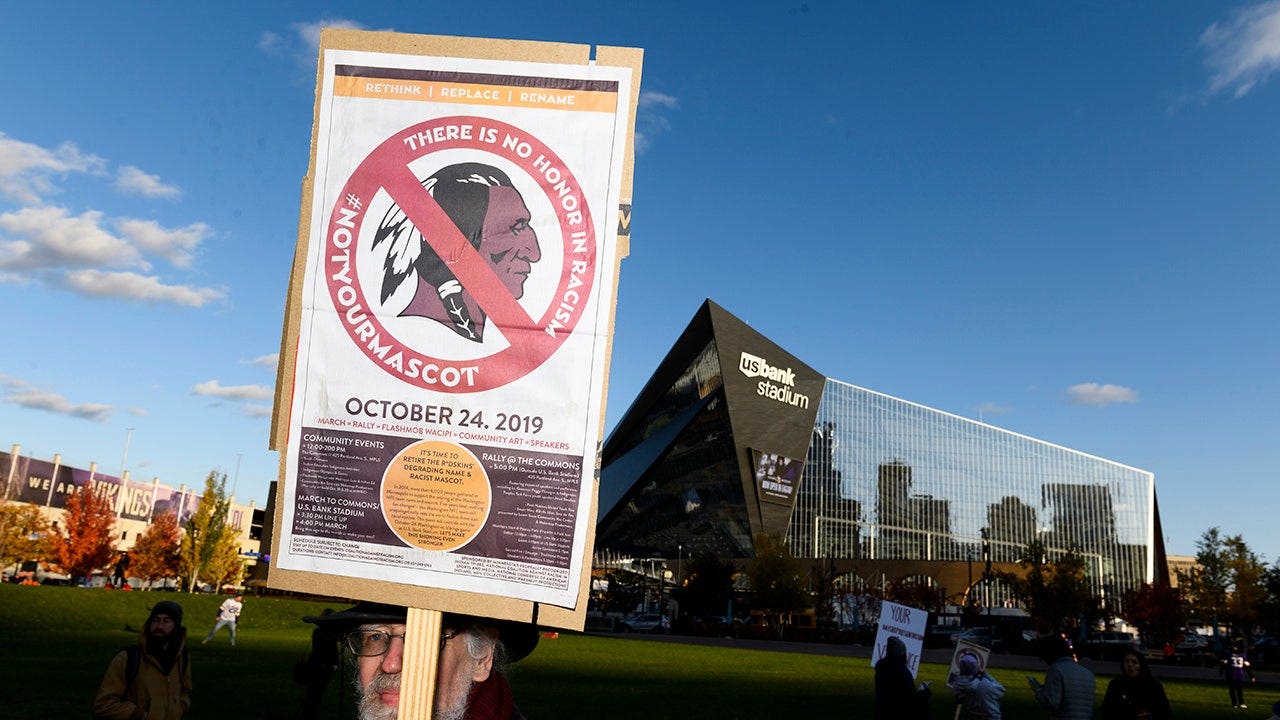
Activists got rid of the Redskins nickname, but they overlooked the real insult to Native Americans

There are two words Terry Anderson thinks should offend Native Americans far more than “Redskins.”Incompetent and incapable.Anderson is a Hoover Institution economist who has spent half a century studying Native American economic conditions. And he wasn’t the least bit bothered by NFL Commissioner Roger Goodell accidentally referring to the Washington Commanders by their former name on Monday.What bothers him is how this country treats the people it claims to be protecting.Native Americans have the lowest life expectancy, the highest suicide rate, the highest rate of alcohol-induced deaths and the lowest on-time high school graduation rate among the nation’s major racial and ethnic groups. Their poverty rate is among the highest, too.JASON KELCE CALLS THE COMMANDERS THE ‘REDSKINS’ DURING GAME, IMMEDIATELY APOLOGIZES SO AS TO NOT GET CANCELEDAnd several of those problems are more pronounced now than they were before the Redskins nickname was retired in 2020. Activists may be patting themselves on the back for getting an 83-year-old nickname removed, but all Anderson is doing is rolling his eyes.”The point is not what we call them. It’s how we treat them,” Anderson told OutKick. “The activists don’t want to change the way we treat them, but they want to change how we refer to them.”At the heart of Anderson’s frustration is the federal government’s insistence on controlling Native American land. Under the Burke Act of 1906, the secretary of the interior can grant a Native American outright ownership of his or her allotted trust land upon determining that the individual is “competent and capable of managing his or her affairs.”Think about the implication of that language. Incompetent and incapable until Uncle Sam determines otherwise.”That’s the most insulting thing, I think, you could say to them,” Anderson said.Much of the land on reservations is held in trust by the federal government, making it more difficult for Native Americans to sell their land or use it as collateral to secure loans and start businesses. Anderson believes this lack of economic freedom is at the root of many of the grim realities Native Americans face today.What particularly frustrates him is the notion that reservations were some act of American generosity. Native Americans, he noted, had thriving economies long before Europeans arrived.But now he feels as though they are being stifled under the guise of compassion — treated like “pets” by a government that seems more interested in providing for them than empowering them.COMMANDERS PLAN TO ADD FAMOUS SPEAR LOGO TO HELMETS WHILE NOT ADMITTING ITS OBVIOUS NOD TO REDSKINS HISTORYAnderson likened the thinking behind the reservation system to taking Native Americans’ land and then saying we’ll “let you live in sort of a diorama, if you will, where we can look in and say, ‘Oh, isn’t it a wonderful culture?'”I asked him if he felt like some of the anti-Redskins activists had a similar mentality toward Native Americans — that they were just pawns to help them feel good about themselves. He gave an emphatic yes.”It is just that,” Anderson said. “It is a way to say, now I’ve cleansed my sins, and I can go on not feeling like I was a bad person or I came from bad people.”For Anderson, understanding what could actually improve life on Native American reservations began with an eye-opening encounter in western Montana.It was 1976, and Anderson was taking some Swiss visitors to meet a member of the Confederated Salish and Kootenai Tribes. Along the way, he warned his guests to brace for abject poverty — rundown houses and neglected fields.WOKE STUNT GOES HORRIBLY WRONG AS MICHIGAN DEMS OPEN CONVENTION WITH BRUTAL ‘LAND ACKNOWLEDGMENT’Instead, they pulled up to a pristine home set against the Mission Mountains, with cattle grazing in grass up to their bellies and a library inside. When a baffled Anderson asked the homeowner how he explained his prosperity, he got a four-word answer.”I own this place.”Anderson, confused about how land ownership worked on reservations, pressed him. The man kept giving him the same four-word answer.”I own this place.”That moment changed the course of Anderson’s career. He began collecting data on land productivity and income on Native American reservations.THE CRAIG CARTON SHOW–UNFILTERED, UNAPOLOGETIC AND UNMISSABLE. DOWNLOAD HIS DAILY PODCAST NOW!Today, he points to the Southern Ute tribe in Colorado as an example of what greater economic sovereignty can accomplish. The tribe has developed its natural resources, diversified its investments and poured money back into its community.And Anderson said one of the first things tribes do when they become wealthier is start using their native languages more.Turns out, economic freedom doesn’t have to come at the expense of Native American culture. It can help preserve it.And yet, when I asked Anderson how much progress he has seen over the past 50 years, his answer was bleak.”Hardly anything has changed on most reservations,” Anderson said.Every year, the Hoover Institution hosts a seminar for Indigenous students. Anderson said many of them show up dejected, feeling as though there’s little hope for their futures. But he sees a change in those students as they learn about the thriving economies their ancestors built.At the end of this past summer’s seminar, Anderson stood up and told the students he was going to direct a choir. He raised his hands and had them repeat five words.”We are competent and capable.”Over and over again.”We are competent and capable.”Imagine if the people who fought so passionately to rid a football team of its nickname fought just as passionately to give Native Americans greater control over their economic futures.Maybe it’s time to take offense at a couple of other words.Do you think changing the Redskins’ name accomplished anything meaningful? Let me know at matthew.calkins@outkick.com